GST registration applies to businesses, individuals, and organisations involved in the supply of goods or services in India. Depending on turnover, business activity, and specific categories notified under GST law, registration may be mandatory or can be obtained voluntarily.
You are required or eligible to obtain GST registration if:
- Your aggregate annual turnover exceeds the prescribed threshold limit:
- ₹40 lakh for suppliers of goods in most states.
- ₹20 lakh for service providers in most states.
- ₹10 lakh for certain special category states, including North Eastern and hill states.
- You are involved in inter-state supply of goods or services, where GST registration may be required regardless of turnover.
- You are an e-commerce seller or supplier operating through platforms such as Amazon, Flipkart, or other online marketplaces.
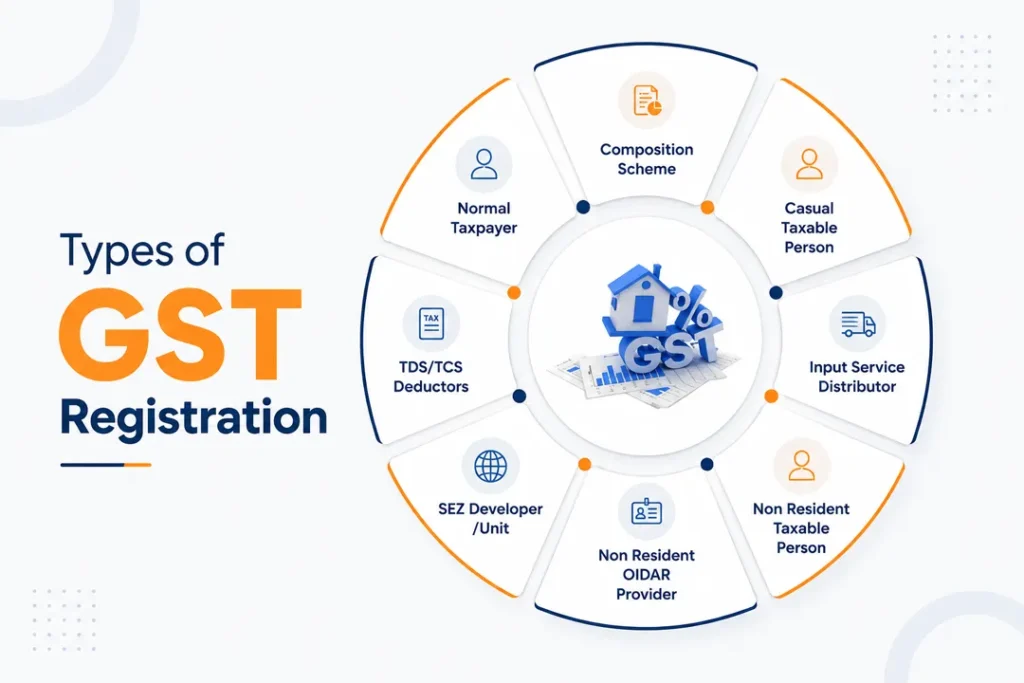
- You operate as a Casual Taxable Person, meaning you supply goods or services occasionally in a state where you do not have a permanent place of business.
- You are a Non-Resident Taxable Person (NRTP) supplying goods or services in India without having a fixed business establishment in India.
- You are liable to pay GST under the Reverse Charge Mechanism (RCM) for specified transactions.
- You are an Input Service Distributor (ISD) distributing eligible input tax credit among different business units.
- You act as an agent of a supplier or represent a registered taxpayer for business activities.
- You provide Online Information and Database Access or Retrieval (OIDAR) services from outside India to customers in India.
- You are required to deduct or collect tax under GST provisions as a TDS or TCS deductor.
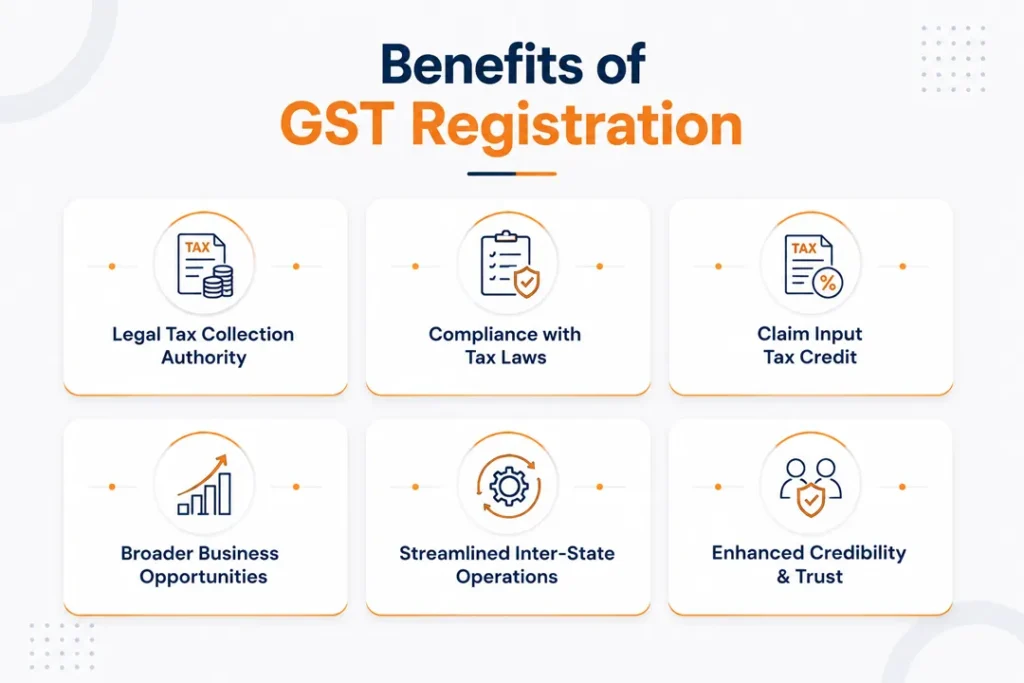
Businesses that do not fall under mandatory registration categories may also opt for voluntary GST registration to claim Input Tax Credit (ITC), improve business credibility, and expand operations.
Mandatory GST Registration for Specific Businesses
Apart from turnover-based requirements, certain businesses and individuals are required to obtain GST registration due to the nature of their activities.
Casual Taxable Persons
Businesses or individuals supplying goods or services occasionally in a state where they do not have a permanent place of business are required to register under GST.
Example: A business setting up a temporary stall at an exhibition or trade fair in another state.
Non-Resident Taxable Persons (NRTPs)
Foreign individuals or companies supplying goods or services in India without having a permanent business establishment in India must obtain GST registration.
Inter-State Taxable Suppliers
Persons involved in inter-state supply of goods or services may require GST registration, even if their turnover is below the general threshold limit.
E-Commerce Operators and Sellers
Businesses selling through online platforms and e-commerce operators are required to comply with GST registration requirements as applicable.
This includes sellers operating through platforms such as:
- Amazon.
- Flipkart.
- Other online marketplaces.
Agents of Registered Taxpayers
Persons supplying goods or services on behalf of another registered taxpayer may be required to obtain GST registration.
Persons Liable Under Reverse Charge Mechanism (RCM)
Businesses or individuals required to pay GST under the reverse charge mechanism must obtain registration as per applicable GST provisions.
Input Service Distributors (ISD)
Businesses distributing GST input tax credit from a central office to different branches or units are required to register as an ISD.
TDS and TCS Deductors
Entities responsible for deducting or collecting GST under the TDS or TCS provisions must obtain GST registration.
OIDAR Service Providers
Foreign companies providing online services such as digital content, software subscriptions, or online database services to Indian customers are required to comply with GST registration requirements.
Aggregators
Platforms that connect customers with service providers, such as transport or service aggregation platforms, may be required to obtain GST registration.
Businesses Registered Under Previous Tax Laws
Businesses registered under earlier indirect tax systems such as VAT, Excise Duty, or Service Tax were required to migrate to the GST system after its implementation.
Voluntary GST Registration for Businesses
Businesses that do not meet the mandatory GST registration criteria can still choose to register voluntarily under GST.
Voluntary GST registration provides several advantages, including:
Claim Input Tax Credit (ITC)
Registered businesses can claim eligible GST paid on business purchases as Input Tax Credit, helping reduce tax costs and improve cash flow management.
Build Business Credibility
A GST registration certificate provides legal recognition and improves trust among customers, vendors, and business partners.
Expand Across India
GST registration enables businesses to undertake interstate transactions and expand their operations across different states.
Sell Through Online Platforms
Many e-commerce platforms require sellers to have GST registration. Obtaining registration early helps businesses access online selling opportunities more easily.
Support Business Growth
GST registration can help businesses participate in tenders, work with larger organisations, and maintain compliance while scaling operations.
Carry Forward Eligible Tax Credits
Businesses with eligible previous tax credits may benefit from transitional credit provisions as applicable under GST rules.
Improve Loan and Rental Opportunities
GST registration and proper tax records can strengthen business credibility when applying for loans, renting commercial spaces, or entering formal business agreements.