What is FoSCoS FSSAI? How to Apply for a Food License Online (2026)
If you operate a restaurant, cloud kitchen, food manufacturing unit, grocery business, catering service, bakery, food truck, or any other food-related business in India, obtaining the appropriate FSSAI registration or license is an important compliance requirement. The Food Safety and Standards Authority of India regulates food businesses to ensure that food sold to consumers meets prescribed safety and quality standards. Today, much of the application process can be completed online through the FoSCoS FSSAI portal, making the process considerably more convenient than the older paper-based approach.
Whether you are starting a small home-based food business or managing a large food manufacturing or importing operation, choosing the correct registration category is essential. Your business type, turnover, food activities, and scale of operations determine whether you need Basic Registration, a State License, or a Central License. This guide explains the foscos fssai process, eligibility, documents, fees, application steps, tracking, renewal, and common questions in straightforward language.
Key Takeaways
FSSAI regulates food safety in India, while FoSCoS FSSAI makes the registration, licensing, and renewal process easier through an online platform.
FoSCoS is the digital system used by FSSAI to manage food business registration, licenses, renewals, and other compliance requirements.
FoSCoS FSSAI allows food businesses to apply online, submit documents, pay fees, and track their application status.
FoSCoS, or Food Safety Compliance System, replaced the older Food Licensing and Registration System (FLRS) to make food licensing more simple and digital.
FoSCoS registration and FSSAI licensing help food businesses follow food safety rules, whether they are home-based businesses, restaurants, manufacturers, retailers, or large food companies.
What is FoSCoS FSSAI? A Complete Guide to FSSAI Registration and Compliance 2026
Running a food business in India comes with an important responsibility: making sure the food you prepare or sell is safe for consumers. The industry includes all kinds of businesses, from a person selling homemade cakes to restaurants, cloud kitchens, food processors, manufacturers, distributors, and exporters. Because these businesses operate at very different levels, India has a food safety system that sets rules according to the nature and scale of the business. The Food Safety and Standards Authority of India (FSSAI) is the authority responsible for regulating these standards and ensuring that food businesses follow the applicable requirements.
To make food registration and licensing easier, FSSAI moved many of its services to an online system called FoSCoS (Food Safety Compliance System). Instead of handling every step through physical paperwork, food business owners can use the portal to submit applications and manage several licensing-related services online. A business owner can use FoSCoS FSSAI to apply for the required registration or license, renew an existing license, make certain changes to business details, and check the progress of an application. This has made the compliance process more convenient for businesses across India.
One important thing to understand is that FoSCoS does not mean that every food business needs the same type of license. The requirement depends on factors such as the business activity, scale of operation, and turnover. For example, a small home-based food operator may qualify for Basic FSSAI Registration, while a larger restaurant, distributor, or manufacturer may need a State License. Certain businesses, including specified importers and other eligible categories, may need a Central License. Selecting the right category is therefore one of the first things a business owner should check before starting FoSCoS registration.
The online system also helps keep the information submitted by food businesses organized and easier to verify. Depending on the service and requirements, FoSCoS can use information from other government systems and databases. This supports a more structured application process and can reduce the need for repeated paperwork. However, businesses still need to provide correct information and valid documents because an online application does not remove the responsibility to meet FSSAI requirements.
For someone applying for the first time, the FoSCoS FSSAI portal may appear complicated because there are several steps involved. You need to identify your business activity, select the appropriate registration or license category, complete the application, upload the required documents, pay the applicable fee, and keep track of the application after submission. Understanding these steps before starting can help you avoid common mistakes and unnecessary delays.
Whether you are opening a cloud kitchen, starting a home bakery, running a restaurant, manufacturing packaged food, or entering the food trading business, knowing how FoSCoS works can make the licensing process much easier. The sections below explain the FoSCoS registration process, required documents, license categories, application steps, fees, tracking methods, and important compliance requirements in simple terms.
What is FoSCoS FSSAI?
FoSCoS, short for Food Safety Compliance System, is the online compliance platform used by FSSAI for various food-business registration and licensing activities. The platform provides an online route for food businesses to apply for registration or licensing, submit documents, make payments, and monitor applications. It is designed to bring different food-safety compliance activities into a centralized digital environment.
The platform replaced the earlier Food Licensing and Registration System (FLRS) and was introduced to make food licensing more technology-driven and accessible. Instead of depending entirely on physical paperwork and office visits, eligible food businesses can initiate their applications online.
Why FoSCoS is Important?
Easy Online Process: FoSCoS allows food businesses to apply for FSSAI registration or a license online without depending entirely on physical paperwork.
One Platform for Compliance: Businesses can use FoSCoS FSSAI to apply, renew licenses, update details, and manage various food safety-related services.
Saves Time: Online applications reduce unnecessary office visits and make it easier to submit documents and payments from anywhere.
Application Tracking: Applicants can check the progress of their application online using the details provided after submission.
Better Record Management:FoSCoS keeps application and licensing information organized, making it easier for businesses to manage their compliance records.
Suitable for Different Food Businesses: Whether you run a home bakery, cloud kitchen, restaurant, retailer, manufacturer, or food distributor, FoSCoS provides a digital route for managing the applicable FSSAI requirements.
Supports Transparent Compliance: The online system helps businesses submit their information in a structured manner and allows authorities to process applications more efficiently.
Helps Businesses Stay Compliant: Completing the correct FoSCoS registration or licensing process helps food businesses meet the applicable FSSAI requirements and operate with greater confidence.
Home-Based Food Businesses: Home bakers, homemade food sellers, and small food producers may need FSSAI registration based on their business activity and turnover.
Restaurants and Cafes: Restaurants, cafes, snack shops, and other food-service businesses generally need the appropriate FSSAI registration or license.
Cloud Kitchens: Businesses preparing and selling food through online delivery platforms may also need the required FSSAI authorization.
Food Manufacturers: Businesses involved in producing, processing, packaging, or manufacturing food products need the applicable FSSAI registration or license.
Food Retailers and Wholesalers: Grocery stores, food shops, distributors, and wholesalers dealing in food products may require FSSAI registration or licensing.
Caterers and Food-Service Providers: Catering businesses, canteens, messes, and similar food-service operators may need FSSAI authorization.
Food Importers and Exporters: Certain businesses involved in importing or exporting food products are subject to FSSAI licensing requirements.
Food Storage and Transportation Businesses: Businesses involved in storing or transporting food may also fall under FSSAI requirements, depending on their activities and applicable category.
In simple terms, anyone carrying out a food-related business should check whether FSSAI registration or a license is required for their specific activity. The appropriate category can depend on the type of business, turnover, capacity, and other applicable conditions.
FSSAI License Eligibility, Fees, and Turnovers
The appropriate FSSAI category depends largely on the nature and scale of the food business. Small operators may fall under Basic Registration, while businesses exceeding the relevant turnover threshold or operating under specific activities may require a State or Central License.
FSSAI Category
General Turnover/Eligibility
Government Fee*
Basic Registration
Small food businesses with turnover generally up to ₹12 lakh per year
₹100/year
State License
Food businesses generally above ₹12 lakh and up to ₹20 crore turnover, subject to activity/category conditions
Generally ₹2,000–₹5,000/year
Central License
Businesses generally above ₹20 crore turnover and specified categories such as importers
Generally ₹7,500/year
*The exact fee can vary according to the applicable kind of business, license category, and current FSSAI fee schedule. The portal should be checked before payment.
These figures are useful for understanding food licence fees, but turnover alone should not be treated as the only deciding factor. Certain businesses can require a Central License because of the nature of their operations even when their turnover does not cross ₹20 crore. Similarly, manufacturers and processors may face different documentation requirements from retailers or food-service businesses. Before submitting an application, it is therefore important to identify the correct Kind of Business (KoB) and eligibility category rather than choosing a license simply based on the fee.
For example, a small neighborhood food seller may qualify for Basic Registration, whereas an established food manufacturer supplying products across multiple locations may need a State or Central License. An importer of food products can fall under Central Licensing requirements because importing is a specifically regulated activity. Getting the category right at the beginning can save time, prevent unnecessary corrections, and reduce the risk of compliance problems later.
Documents Required for an Online Food Licence Application
Once you know which category applies to your business, the next step is to prepare the supporting documents. The exact list depends on the type of food activity, scale of operation, and category selected on FoSCoS.
Common Business Documents
For many food businesses, commonly requested information or documents can include:
Recent passport-size photograph of the applicant or authorized person, where applicable.
Identity proof, such as Aadhaar, PAN, passport, voter ID, or another accepted document.
Proof of business premises, such as a rent agreement, lease document, electricity bill, ownership document, or other accepted address proof.
Details relating to the business constitution, where applicable.
Information about the food activities carried out at the premises.
Manufacturer-Specific Documents
Food manufacturers and processors can require additional technical documents depending on their operations. These may include:
Factory or premises blueprint/layout plan.
Machinery and equipment inventory.
Details of food processing or manufacturing activities.
Water analysis or safety laboratory test report, where applicable.
Information about the products manufactured or processed.
Other declarations, certificates, or supporting documents applicable to the specific business.
The important point is not simply to collect as many documents as possible. The documents should accurately correspond to the business details entered in the application. If the business address, applicant information, product details, or activity description does not match the supporting paperwork, the application may face queries or delays. Before beginning the food licence apply process, reviewing the current document requirements for the selected business category can make the online submission much smoother.
How to Apply for FSSAI License Through FoSCoS Step by Step
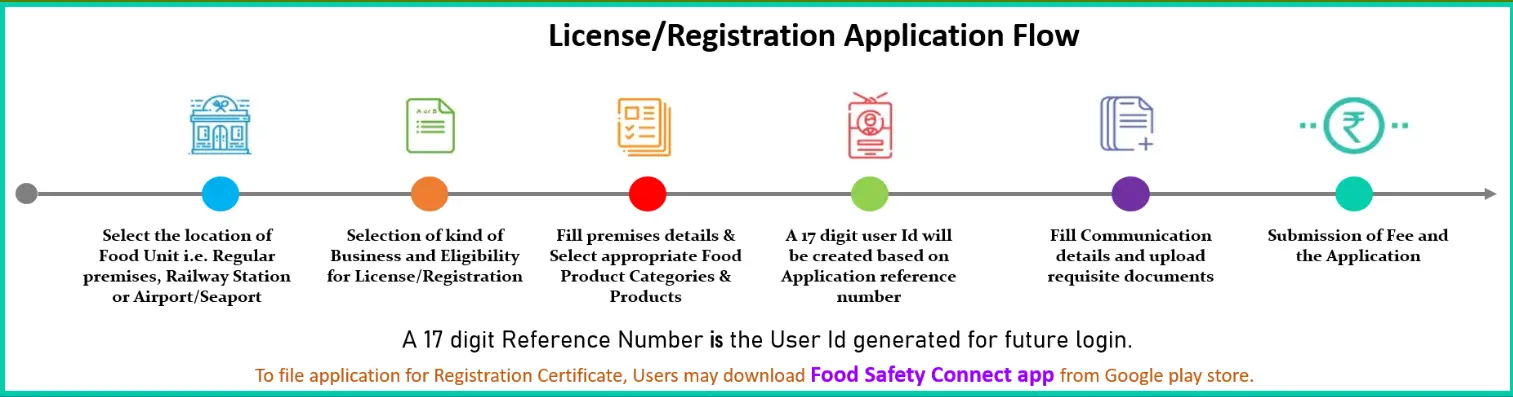
Applying for an FSSAI registration or license through FoSCoS FSSAI is an online process. Once you know your business category and have the required documents ready, you can follow these simple steps.
Create a new account if you are a first-time user.
Existing users can complete the FoSCoS login using their registered details.
Enter your contact information carefully so you can receive application-related updates.
Step 2: Select Your State and Business Type
Select the state where your food business operates.
Choose the correct business category, such as manufacturer, retailer, wholesaler, restaurant, caterer, or food service.
Make sure the selected category matches your actual business activity.
Step 3: Fill Form A or Form B
Form A is generally used for Basic FSSAI Registration.
Form B is used for State and Central FSSAI Licenses.
Enter your business name, address, contact details, business activity, and food product information.
Check the details carefully before submitting.
Step 4: Upload Documents & Pay the Fee
Upload the required documents in the format accepted by the portal.
Check that all documents are clear and match the information in your application.
Pay the applicable food licence fees online.
Submit the application and save your acknowledgement/reference number.
In short, the food licence apply process involves selecting the right category, completing the application, uploading documents, paying the fee, and submitting the application through FoSCoS.
How to Track and Verify Your FSSAI License Number Status
After submitting your application through FoSCoS FSSAI, you can easily check its status online using the application reference number.
Track Your Application: Use the tracking option on the FoSCoS portal to check whether your application is under review, approved, or requires any action.
Application Number vs FSSAI Number: The application reference number is used to track your application, while the final FSSAI license number is issued after approval.
Check Your FSSAI License No: Once approved, your certificate will show the official 14-digit FSSAI number.
Save Your Details: Keep your application reference number and fssai license no safely for future renewal, modification, or other compliance needs.
Download the Certificate: After approval, you can access and download the FSSAI registration or license certificate through the portal.
Common Challenges in FSSAI Registration Through FoSCoS
The FoSCoS FSSAI portal has made the application process easier, but first-time applicants can still come across a few difficulties. Understanding these issues beforehand can help you complete your FoSCoS registration more smoothly.
Understanding Documents: Different food businesses may need different documents, and knowing exactly what to submit can sometimes be confusing.
Online Problems: Website glitches, payment issues, or delays in updating application status can occasionally slow down the process.
Renewal Issues: Failing to renew your FSSAI registration or license on time may result in late fees and other compliance problems.
Choosing the Correct Category: Businesses carrying out more than one activity, such as manufacturing, selling, and distributing food, may be unsure about which license category applies.
Incorrect Information: Small mistakes in the application, such as an incorrect address or business activity, can lead to queries and unnecessary delays.
If the process feels complicated, Cotaxo can help make the FSSAI application journey easier by providing guidance with the appropriate category, documentation, application process, and other compliance requirements.
FSSAI Rules: License Validity, Renewal, and Compliance
Follow Food Safety Rules: Getting an FSSAI registration or license is not enough. Businesses must continue following applicable rules related to food safety, hygiene, labeling, and record-keeping.
License Validity: An FSSAI registration or license can generally be taken for 1 to 5 years, depending on the period selected by the business.
Renew Before Expiry: Businesses should plan their renewal in advance and apply at least 30 days before the expiry date to avoid last-minute problems.
Late Renewal Fee: Delaying renewal can lead to a late fee of ₹100 per day, subject to the applicable FSSAI rules.
Keep Business Details Updated: If your business changes its address, food activities, products, or other important details, make sure the FSSAI records are updated as required.
Set Renewal Reminders: Keep a note of your license expiry date and set reminders well in advance so you do not miss the renewal deadline.
Stay Compliant: Regularly check that your FSSAI registration or license still matches your current business activities and requirements.
How Cotaxo Helps in FSSAI Licensing
Getting an FSSAI registration or license can feel confusing when you are unsure about the right category, documents, or application process. Cotaxo helps simplify these steps so that food business owners can handle their licensing requirements with greater ease.
Application Guidance: Helps you understand the FSSAI registration or license process and the steps involved.
Document Support: Assists in identifying and preparing the documents required for your food business.
Correct License Category: Helps you understand which FSSAI registration or license may apply to your business.
Online Application Support: Provides assistance with completing the application and submitting the required information.
Renewal Assistance: Helps businesses manage their FSSAI renewal requirements and avoid missing important deadlines.
Compliance Support: Provides guidance to help food businesses stay aligned with applicable FSSAI requirements.
For more information about FSSAI registration and licensing services, visit Cotaxo.
FAQs,
Q: How do I download my FSSAI licence online?
A: You can easily download a digital copy of your certificate directly from the official portal once your application is approved. Follow these steps:
Go to the official website at foscos.fssai.gov.in.
Click on the Login-FBO button on the homepage and enter your foscos login credentials (Username, Password, and Captcha).
Once logged into your dashboard, look at the left-hand menu and click on the “Issued” tab.
Select “Issued License/Registration” from the dropdown options.
Locate your business name and click on your unique 14-digit fssai license no.
Your certificate will open as a secure PDF. Click Download/Print to save it to your device.
Note: The FSSAI also automatically sends a digital copy of your approved license directly to your registered email ID, which you can download and print at any time.
Q: What are the FSSAI license renewal fees for 2026?
The FSSAI license renewal fee depends on the type of registration or license your food business has. You can complete the renewal process online through the FoSCoS FSSAI portal. The government fee is generally charged according to the selected validity period and the category of your food business.
The commonly applicable annual government fees are:
Basic FSSAI Registration: ₹100 per year
State FSSAI License: ₹2,000 to ₹5,000 per year, depending on the type of food business and applicable category
Central FSSAI License: ₹7,500 per year
The exact food licence renewal fee may vary depending on your business category and the validity period selected. Therefore, it is advisable to check the final amount displayed on the FoSCoS portal before making the payment.
🚨 Crucial Update on 2026 Late Penalties & Window
The 30-Day Rule: Submit your renewal via the FoSCoS dashboard at least 30 days before your license expires.
Late Penalty: If you miss this 30-day window, a penalty of ₹100 per day is automatically added to your fee.
Expiration Risk: If your license passes its final expiry date without renewal, your FSSAI number becomes permanently invalid, and you must apply for a brand new registration from scratch.
(Note: Government fees are subject to taxes via the online gateway; professional processing charges apply separately if using a compliance consultant.)
Q: How to Get an FSSAI License for Homemade Products?
If you sell homemade food products such as cakes, pickles, snacks, sauces, spices, or other packaged foods, you may need FSSAI registration or a food license. The type of FSSAI approval depends mainly on your business activity and annual turnover.
Here is the simple process:
Check Your FSSAI Category: Small homemade food businesses may qualify for Basic FSSAI Registration, while larger businesses may require a State or Central FSSAI License.
Visit the FoSCoS Portal: Apply online through the official FoSCoS FSSAI portal.
Create a FoSCoS Login: Register your account using your basic contact details.
Select Your Food Business Activity: Choose the activity that correctly describes your homemade food business.
Fill in the Application: Enter your business name, address, food products, contact details, and other required information.
Upload Documents: Provide the documents required for your specific registration or license category.
Pay the Government Fee: Pay the applicable FSSAI registration or license fee online.
Track Your Application: Use your application/reference number to check the status through FoSCoS.
Download Your Certificate: Once approved, you can download your FSSAI registration certificate or license.
Important: Having an FSSAI registration or license is not the only requirement. Homemade food sellers must also follow applicable food safety, hygiene, packaging, and labeling requirements.
If you are starting a small home-based food business, Basic FSSAI Registration may be the appropriate starting point, subject to the applicable eligibility conditions.
Q: What Is the Difference Between FSSAI and FoSCoS?
FSSAI and FoSCoS are related, but they are not the same thing. FSSAI is the food safety authority, while FoSCoS is the online platform used to manage food registration and licensing.
FSSAI
FoSCoS
FSSAI stands for Food Safety and Standards Authority of India.
FoSCoS stands for Food Safety Compliance System.
It is the regulatory authority responsible for food safety in India.
It is the online system used for food licensing and registration.
FSSAI creates and enforces food safety regulations.
Businesses use FoSCoS to apply for, renew, modify, and track licenses.
It issues FSSAI Registration Certificates and Licenses.
It provides the online process for obtaining and managing them.
In simple words: FSSAI is the authority, while FoSCoS is the online platform through which food businesses can complete many FSSAI-related services.
For example, if you want to apply for an FSSAI license online, you generally use the FoSCoS portal to submit your application, upload documents, pay the applicable fee, and track the application status.
Conclusion
Getting an FSSAI registration or license through FoSCoS is an important step for any food business in India. Choosing the right category, Basic, State, or Central, helps avoid delays and compliance issues.
FSSAI compliance is more than paperwork; it builds customer trust and business credibility. Whether you run a home kitchen, restaurant, cloud kitchen, or manufacturing unit, keeping your FSSAI registration or license valid and updated helps your business operate smoothly and grow with confidence.